
Skip the intro · jump to the list ↓
There’s this myth floating around that a tomato cage has to be one of those flimsy cone shaped things from the garden center. You know the ones, they tip over the second a plant gets heavy, lol! That is simply not true.
A good tomato cage can be built from almost anything sitting in a garage or leaning against a fence. Cattle panels, old ladders, rebar, pallets, it all works if you know the trick.
This list rounds up 20 ideas that actually hold up all summer, not just the pretty ones that collapse by July. Each was picked because it’s buildable in an afternoon, doesn’t need fancy tools and looks decent enough that you won’t hide it behind the shed.
Some of these lean rustic, some lean modern. A few are just clever reuses of things most people throw out. There’s something here whether you’ve got one raised bed or an entire backyard row.
Scroll through and grab whichever fits your space and your budget. Under each idea you’ll find the small details that matter, plus a link to the full how-to.
Fair warning, once you see a few of these you’ll want to redo your whole garden setup, haha!
TOMATO CAGE IDEAS
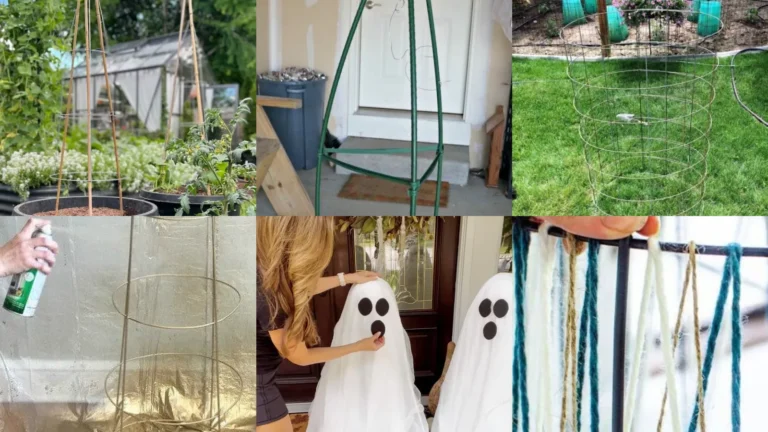
DIY Wire Tomato Cages
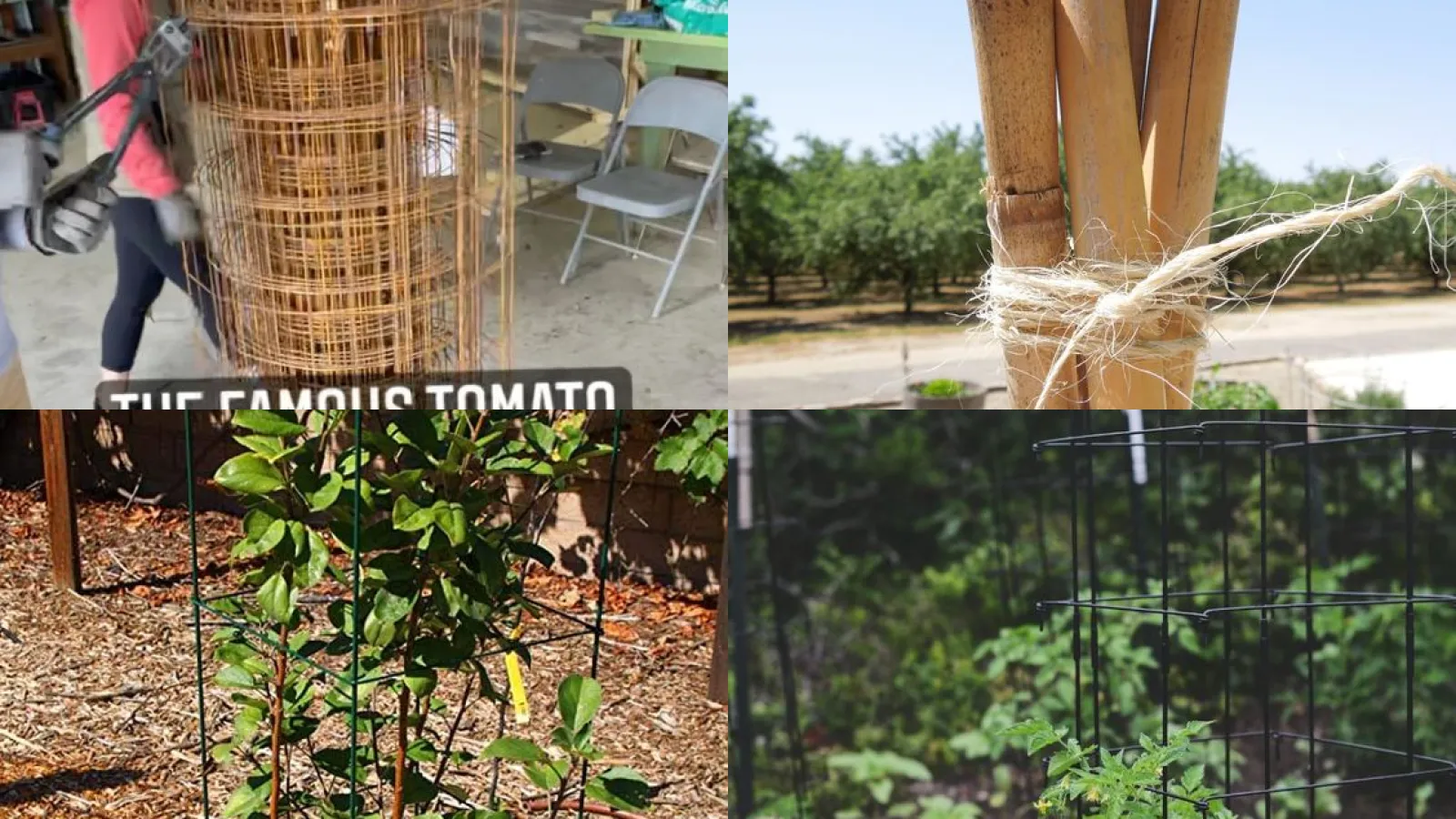
We’re starting off strong with the classic DIY wire cage. Bend a length of heavy gauge wire fencing into a cylinder and you’ve got a cage that actually outlasts the plant.
This is the version most people picture when they think tomato cage, only sturdier. It costs next to nothing if you already own wire cutters.
Cattle Panel Tomato Trellis
How sturdy does a cattle panel trellis look? These arched panels handle even the heaviest heirloom vines without a single wobble.
Bend the panel into an arch between two T-posts and let the tomatoes climb right up it.
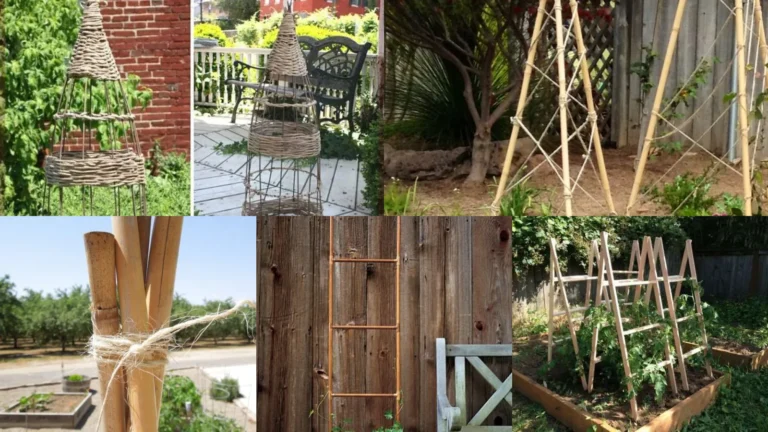
Wooden Ladder Tomato Support
An old wooden ladder leaned against a fence makes a surprisingly good tomato support. Prop it at an angle and tie the branches to each rung as they grow.
This one has that lived-in farmhouse charm without trying too hard. Skip painting it and let the weathered wood do the talking.
Concrete Reinforcing Mesh Cages
Concrete reinforcing mesh gets overlooked constantly, which is a shame because it makes the strongest cage on this whole list. The openings are wide enough to reach in and pick tomatoes without wrestling the wire.
Cut a six foot length, roll it into a cylinder and secure the ends with wire ties. It rusts a little over time, but honestly that just adds character.
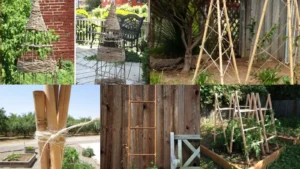
Bamboo Teepee Tomato Stakes
Bamboo teepees bring a cottage garden feel that a store-bought cage just can’t match. Lash three or four poles together at the top with garden twine.
They fold flat for winter storage too, which is more than I can say for most cages. Cheap, simple and honestly kind of pretty once the vines fill in.
PVC Pipe Tomato Frame
Got a bunch of leftover PVC pipe lying around? No problem there! Cut it into stakes and elbows and build a frame that’s light enough to move but strong enough to stay put.
The white pipe reflects heat too, which some gardeners swear keeps roots cooler in July.
Stackable Tomato Cage Rings
Stackable rings solve the height problem every tomato eventually creates. Start with one ring at planting time and add more as the plant climbs.
No more cages that are too short by August. They store flat too, so the shed doesn’t turn into a wire jungle over winter.
Repurposed Pallet Tomato Cage
Repurposing a pallet into a tomato cage is one of those ideas that sounds odd until you see it done. Pull a few slats free and nail them into a simple square frame.
This is the option for anyone who’d rather build than buy. Not that I’m against buying things, haha, but there’s something satisfying about turning trash into trellis.
Rebar Corner Tomato Cage
Rebar bent into corner stakes with twine strung between them makes a cage that practically disappears visually. The plant becomes the entire show instead of the hardware.
It takes a bender or a strong pair of hands, but the result is nearly invisible support.
Florida Weave Tomato Trellis
The Florida weave is less a cage and more a system. Once you learn it you’ll never go back. String twine between stakes at increasing heights and weave the plant through as it grows.
This is the method commercial growers use for entire rows, so you know it holds up. It also makes harvesting way easier since nothing is boxed in.
Painted Colorful Tomato Cages
Who says garden hardware has to be boring? A coat of bright paint turns a plain wire cage into something that actually looks intentional in the yard.
Reds, teals, sunny yellows, whatever matches your fence or your mood that season. This is the easiest upgrade on the entire list and it costs one can of spray paint.
Hanging Basket Tomato Support
Hanging basket supports work surprisingly well for compact or patio tomato varieties. Suspend a small cage from a sturdy hook and let the plant spill over the sides a little.
It’s a smart trick for anyone short on ground space. Balconies and small patios finally get to grow tomatoes too.
Old Ladder Garden Trellis
An old ladder laid on its side between two posts becomes a low, wide trellis that sprawling tomato varieties actually love. Branches weave through the rungs on their own with barely any tying needed.
Simple Stake And String Method
Sometimes the simplest option really is the best one. A single sturdy stake pounded in at planting time, with soft twine tied in a loose figure eight as the plant climbs.
It’s not fancy. It’s not going to win a garden magazine feature. But it works every single year without fail.
Wire Mesh Cylinder Cages
A wire mesh cylinder is basically the reinforcing mesh idea’s smaller, friendlier cousin. Use a finer gauge mesh and the cage becomes light enough to lift with one hand while still holding its shape.
Great for medium sized plants that don’t need the heavy duty treatment.
Fold Flat Tomato Cages
Fold flat cages are a storage lifesaver if your shed is already bursting. The hinged wire panels collapse down to almost nothing once the season ends.
No more cramming bulky cages into corners all winter. They pop back open in seconds come spring, these really don’t get more practical than this.
Vertical Garden Tomato Frame
A vertical garden frame turns a tomato patch into something that looks almost architectural. Wooden slats or wire panels stack upward, giving each plant its own defined lane to climb.
This works especially well if you’re growing several varieties close together and want to keep the vines from tangling into one giant mess.
Recycled Fence Panel Cages
Recycled fence panels make sturdy, ready-made cage walls with almost no cutting involved. Stand a few sections in a rough square around the plant and wire the corners together.
It’s the sort of project that uses up scraps from an old fence repair instead of hauling them to the dump.
A Frame Tomato Trellis
An A-frame trellis looks sharp and handles sprawling vines better than a straight cage ever could. Two panels lean together at the top, forming a little tent the plant can climb up both sides of.
This shape also casts nice dappled shade underneath, which some gardeners use for lettuce or herbs planted below. Two crops, one structure, not bad!
Metal Grid Tomato Tower
Last but definitely not least, we have the metal grid tower. It might be the most heavy duty option on this entire list. Welded grid panels form a tall square tower that barely budges in wind or storms.
It costs more upfront than most of these ideas, sure. But if you’re tired of replacing flimsy cages every couple seasons, this is the one to finally commit to.
Just a little note - some of the links on here may be affiliate links, which means I might earn a small commission if you decide to shop through them (at no extra cost to you!). I only post content which I'm truly enthusiastic about and would suggest to others.
And as you know, I seriously love seeing your takes on the looks and ideas on here - that means the world to me! If you recreate something, please share it here in the comments or feel free to send me a pic. I'm always excited to meet y'all! ✨🤍
Xoxo Camille
✨ Wait! Your next favorite is right here
These are the posts readers open next. See why: