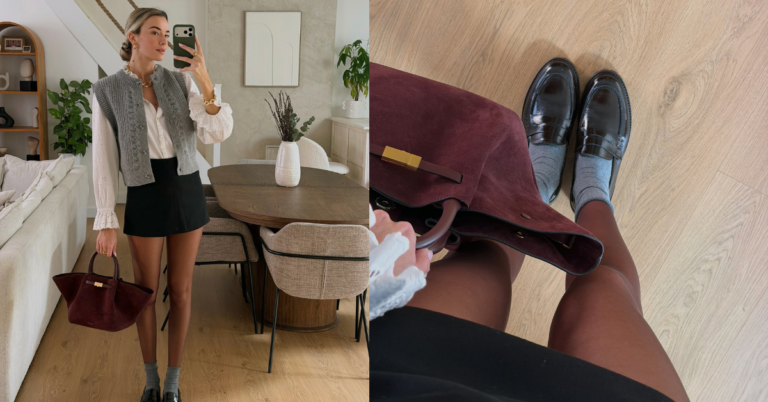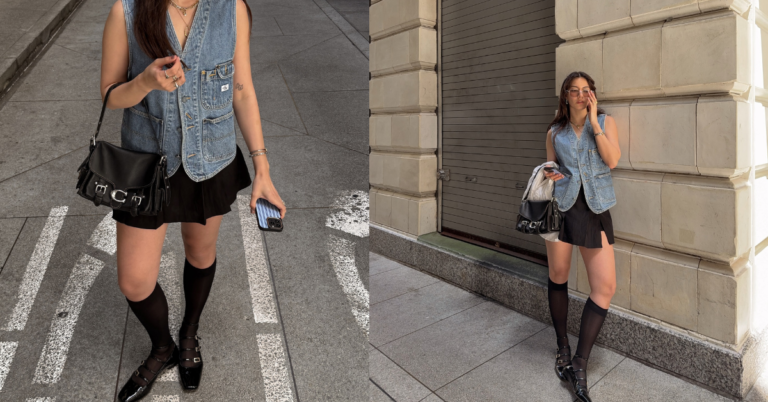

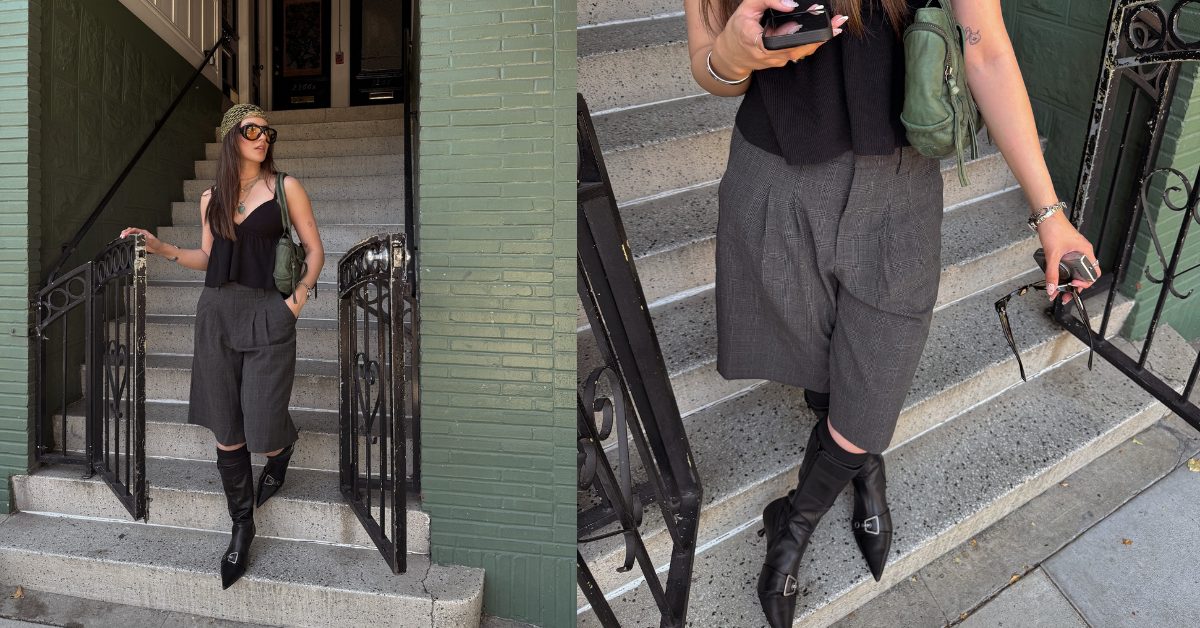
Festival outfits feel like they require a whole new wardrobe because the photos look so “specific”. But most of the look is not the clothes. It’s the proportions (cropped top + high waist), the texture mix (denim + something floaty), and the practical choices (shoes, bag, layers) that let you stay outside all day without getting annoyed.
So instead of “festival shopping,” you’re going to do something more useful: build 2-3 repeatable outfits from what you already own that can handle heat, dust, surprise rain, and a lot of standing.
This guide is for the real version of a festival day: walking far, sitting on the ground, portable toilets, spilled drinks, and weather that changes its mind. You’ll end with a mini formula, a quick closet audit, and a few outfit “templates” you can copy.
Quick answer for skimmers
- Pick one base: shorts, a skirt, wide-leg pants, or a simple dress.
- Add a top that stays put: fitted tank, rib tee, bodysuit, or tied button-down.
- Choose one practical layer: denim jacket, overshirt, hoodie, or light rain shell.
- Use shoes you can walk in for hours. If you’re unsure, go with sneakers or boots.
- Bring a hands-free bag (crossbody, belt bag) with a zipper.
- Make it look intentional with two accessories max: sunglasses + hat, or bandana + jewelry.
- Repeat outfits on purpose. Most people do, they just do not say it out loud.
If you only do one thing: build your outfit around the shoes and bag first, then make the clothes match.
The decision framework (so you stop overthinking)
Step 1: Choose your “comfort baseline”
Pick the thing you already wear on long days without regretting it:
- High-waisted shorts you do not tug at
- A skirt that does not ride up
- Pants you can sit in on the ground
- A dress you can move in
If you do not have any of these, that’s fine. Choose the “least annoying” option you own and commit.
Step 2: Match your outfit to the ground and the weather
- Grass + mud risk: boots or trail-ish sneakers, avoid delicate hems
- Dust + gravel: closed-toe shoes, avoid flowy pants that drag
- Hot sun: breathable fabrics, hat, sunglasses, minimal layers
- Cool nights: one real warm layer (not a cute-but-useless one)
Step 3: Pick a “silhouette formula”
This is the part that makes it look festival without buying anything.
Choose one:
- Tight top + loose bottom (rib tank + cargo pants)
- Loose top + fitted bottom (oversized band tee + biker shorts)
- One piece + one layer (dress + denim jacket)
- Matching set vibe (same-color top and bottom, even if they’re not a set)
Step 4: Lock in your non-negotiables
This is the principle: you need stability and hands-free function more than you need a new outfit.
Your non-negotiables:
- Shoes you can walk and stand in
- A bag that closes
- One layer that matches the forecast
- One plan for sun or rain
A simple closet audit (10 minutes, no shopping)
Pull these items out and put them on your bed:
Bottoms
- Denim shorts
- Black shorts or biker shorts
- Wide-leg pants or cargos
- Midi skirt (if you have one)
Tops
- Ribbed tank
- Fitted tee
- Button-down shirt
- Any graphicwwwWW graphic tee you actually like
Layers
- Denim jacket
- Overshirt/flannel
- Hoodie
- Light rain jacket (if you own one)
Shoes
- Sneakers you trust
- Boots (combat, Chelsea, hiking-ish)
- One backup pair for the car (even older sneakers)
Accessories
- Sunglasses
- Hat or bandana
- Small hoop earrings / simple necklace
- Belt (optional)
Now make two outfits and take quick mirror photos. That’s your festival “lookbook.” You are done.
Outfit templates using normal clothes
1) The “I want to look put together but be comfortable” template
- High-waisted shorts (denim or black)
- Fitted tank or rib tee
- Overshirt worn open (button-down, flannel, linen shirt)
- Sneakers or boots
- Crossbody bag
Why it works: the fitted top anchors the outfit, the overshirt adds movement, and you can tie it around your waist later.
2) The “hot day, no fuss” template
- Biker shorts or athletic shorts
- Oversized tee or cropped tee (you can knot it)
- Baseball cap or bandana
- Chunky sneakers
This is the easiest “festival silhouette” with items you already own.
3) The “dress, but make it practical” template
- Simple sundress or slip-style dress
- Denim jacket or light overshirt
- Boots or sneakers
- Sunglasses
This one photographs well and feels like you tried, but it’s still basically one garment.
4) The “cool night” template
- Wide-leg jeans or cargos
- Fitted long-sleeve top or bodysuit (or a tee + layer)
- Hoodie or denim jacket
- Boots
A note: wide-leg pants look great, but they can be annoying in portable toilets if they touch the floor. That trade-off is real, and there’s no perfect solution besides being careful.
5) The “rain risk” template (without buying gear)
- Any bottom you can move in (shorts beat dragging hems)
- Tee + hoodie
- Your existing rain jacket if you have one
- Older sneakers you don’t mind getting messy
Optional: pack a plastic bag for your phone and wallet. Skip it if you already have a water-resistant bag.
The boring parts that make the outfit work
Shoes: the #1 thing that decides your day
If you want to wear something you rarely walk in, festivals will punish you for it.
Best “already own” options:
- Running-style sneakers with cushioning
- Chunky sneakers
- Chelsea boots, combat boots
- Trail sneakers (if you have them)
Bring blister patches if you’re prone to hot spots.
This won’t work if you’re determined to wear brand-new shoes for the first time at the festival. Even “comfortable” shoes can create friction once you walk a lot.
Bag: hands-free, zippered, boring for the win
Choose:
- Crossbody with a zipper
- Belt bag worn across the chest
- Small backpack with secure pockets
Avoid: open totes, anything you have to hold, and anything that constantly slides off your shoulder.
Sun + heat: dress for it like it’s the main event
A hat and sunglasses do more than you think, and they cost you nothing if you already have them.
If you’re using sunscreen, public health guidance recommends broad-spectrum sunscreen, and many guidelines recommend SPF 30 or higher for stronger protection.
The CDC also notes that sunscreen is most effective when combined with shade and protective clothing.
Practical styling tip: a lightweight button-down worn open is both an outfit piece and sun coverage.
Hearing protection: your future self will thank you
Festival sound levels can be loud for long periods. General guidance around noise exposure often references limits like 85 dBA over 8 hours (occupational context), and loudness plus duration is what drives risk.
If you already have earplugs (even basic ones), bring them. If you don’t, you can still protect yourself by taking breaks away from speakers.
Hydration: the simple “check”
You do not need a perfect hydration plan. You just need to notice when you’re falling behind. The NHS lists signs of dehydration like thirst, dark yellow urine, feeling dizzy or lightheaded, and feeling tired.
Bring a refillable bottle if the venue allows it.
Festival morning routine (application, not perfection)
If you already have a routine that works, you can skip this section and go straight to the variations below.
- Put your outfit on and do a two-minute movement test: walk fast, sit down, stand up, lift arms.
- Pack a mini kit: tissues, hand sanitizer, blister patches, lip balm, hair tie.
- Decide where your phone lives (bag pocket) so you’re not holding it all day.
- Take one mirror photo so you don’t re-litigate your outfit five minutes later.
If your mornings are unpredictable, some of this prep simply won’t stick and that’s fine. The goal isn’t perfection, it’s fewer bad moments.
Common mistakes (and easy fixes)
- Choosing an outfit that needs constant adjusting
Fix: pick one fitted piece (tank, tee, bodysuit) so the rest can be looser. - Wearing something you can’t sit in
Fix: test sitting on the floor at home. If it’s a no, it’s a no. - Over-accessorizing
Fix: choose two: hat + sunglasses, or sunglasses + jewelry. - Ignoring the night temperature drop
Fix: one real layer. A hoodie counts. A tiny shrug does not. - Trying to look different every day
Fix: repeat on purpose. I usually tell people to stop chasing variety for festivals. One good default outfit beats five “almost” outfits.
Variations: pick the one that matches your vibe
If you want “cool but not costume”
- Straight jeans + tank + overshirt + sneakers
- Simple jewelry, hair down or in a low bun
If you want “soft and feminine”
- Sundress + denim jacket + boots
- Bandana or simple necklace
If you want “edgy”
- Black shorts + graphic tee + boots
- Leather belt (if you own one), sunglasses
If you want “sporty”
- Biker shorts + oversized tee + cap
- Running sneakers, small crossbody
If you want “minimalist”
- All black or all white basics
- One statement accessory (hat or sunglasses), done
If you’re going for 2-3 days
Repeat a base and rotate one element:
- Same shorts, different tops
- Same shoes, different layer
- Same silhouette, different accessories
FAQ
How do I look “festival” without buying anything?
Use a silhouette formula (tight top + loose bottom, or oversized top + fitted bottom), add one layer, and keep accessories simple.
What if I don’t own boots?
Sneakers are completely fine. Clean them the night before so they look intentional.
Can I wear sandals?
You can, but closed-toe is usually better for dust, crowds, and long standing. If you wear sandals, pick ones that strap on securely.
What should I avoid wearing?
Anything that needs constant pulling up, shoes you haven’t walked in, and hems that drag on the ground.
How do I plan for sun safely without making it a whole project?
Hat + sunglasses + lightweight layer is the easiest. For sunscreen, many guidelines recommend broad-spectrum SPF 30 or higher.
Are earplugs really necessary?
Not “necessary,” but very smart. Guidance from WHO and occupational health sources emphasizes that loudness plus time increases risk.
What’s the best bag?
A small zippered crossbody or belt bag worn across the chest. Less fiddling, more dancing.
What if the forecast says rain but it might not?
Pick shoes that can handle mud and bring your existing rain jacket if you have one. This is optional: bring a small plastic bag to protect your phone. Skip it if your bag is already water-resistant.
Just a little note - some of the links on here may be affiliate links, which means I might earn a small commission if you decide to shop through them (at no extra cost to you!). I only post content which I'm truly enthusiastic about and would suggest to others.
And as you know, I seriously love seeing your takes on the looks and ideas on here - that means the world to me! If you recreate something, please share it here in the comments or feel free to send me a pic. I'm always excited to meet y'all! ✨🤍
Xoxo Camille