
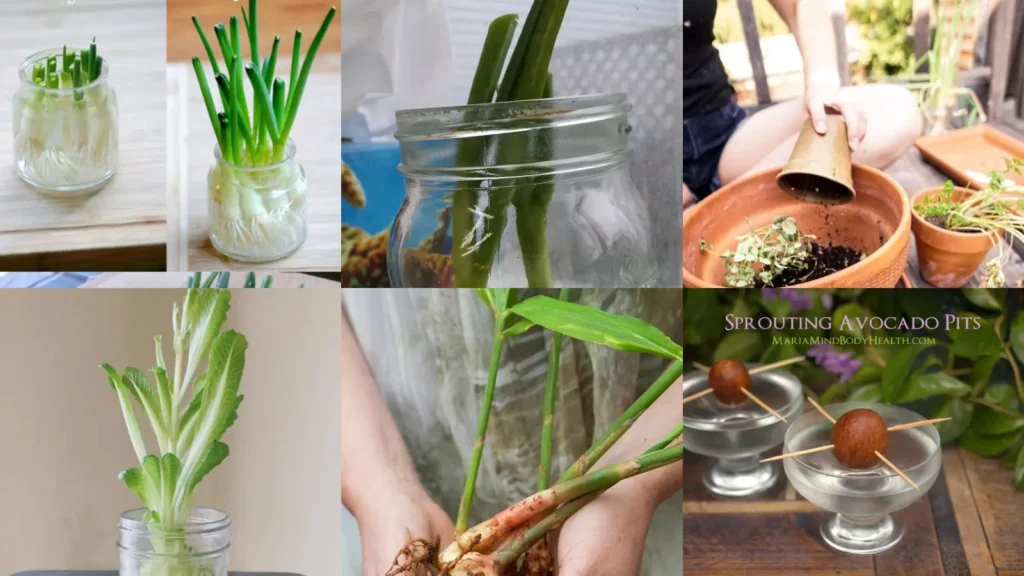

By the end of this list you’ll have a windowsill full of regrown vegetables and zero excuse to toss another scrap in the trash.
Kitchen scrap gardening is exactly what it sounds like. You save the ends and roots you’d normally compost, then let them sprout into something new.
I scrolled through a so pretty amount of pins to put this together. Most of them were either impossible to keep alive or needed equipment nobody actually owns, lol!
So I kept only the ones that are cheap, doable on a random Tuesday and genuinely nice to look at on a counter.
Some of these regrow into full plants you can harvest again and again. Others are just satisfying to watch sprout in a jar of water.
Grab a few glass jars, clear off a sunny windowsill and let’s get into it.
KITCHEN SCRAP GARDEN IDEAS
Green Onion Scraps Regrowing
We’re starting off strong with green onion scraps, the easiest win on this whole these list. Drop the white root ends in a shallow glass of water and they start sprouting within days.
Snip what you need and the roots just keep pushing out more.
- Never buy scallions again
- Sprouts in a couple days
- Snip and it regrows
Celery Base Water Jar

Celery works almost the same way as the green onions. Cut off the base, sit it in a shallow dish of water and new stalks push up from the center within a week.
The middle looks a little slimy at first. Don’t panic, that’s totally everyday.
- The base nobody bothers keeping
- New stalks in about a week
- Just needs a shallow dish
Windowsill Scrap Garden Setup
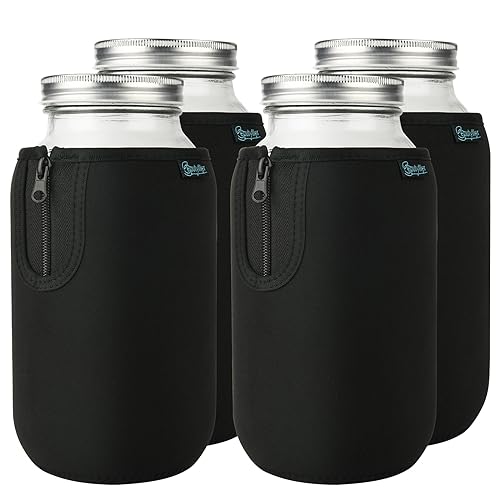
A dedicated windowsill setup turns random scraps into an actual little garden. Line up a row of matching jars and suddenly the mismatched veggie ends look intentional.
This one is really about presentation more than anything. A few uniform glasses and some morning sun do all the work.
It becomes the spot everyone stops to look at when they walk into the kitchen.
- The counter setup that gets noticed
- Matching jars make it look styled
- Needs bright morning light
Lettuce Heart Regrowth Jar

Save the heart of a head of lettuce instead of tossing it. Set it root side down in a shallow bowl of water and small new leaves start forming in the center.
Read also: 18+ Genius Potato Grow Bag Ideas That Maximize Harvests
It won’t give you a full head again. Still, enough for a garnish or a sandwich topper. That counts for something.
Ginger Root Kitchen Garden
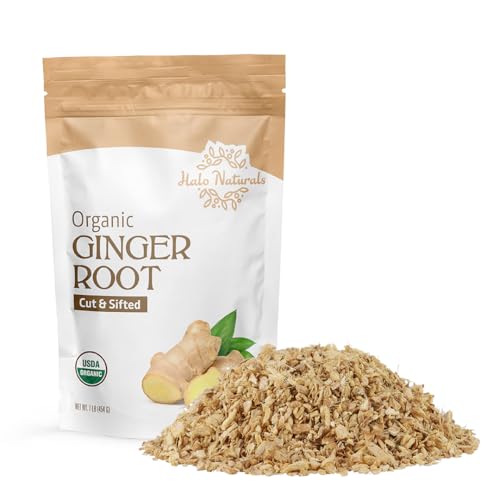
A knob of ginger with a few visible buds can turn into an actual little plant. Bury it shallow in potting soil with the buds facing up.
New shoots take a few weeks to show, so patience matters here. Once it’s established you can keep harvesting small pieces from the same root.
- The spice drawer surprise
- Buds face up in soil
- Takes a few patient weeks
Avocado Pit Sprouting Display

Are you guys seeing how many toothpicks it takes to suspend one avocado pit right now? Four little toothpicks hold the pit half submerged over a glass of water.
It takes weeks before anything happens, so don’t give up on it too early. When the roots finally show up it feels like a tiny victory.
- Slow but oddly satisfying
- Four toothpicks do the trick
- Roots show up after weeks
Pineapple Top Replanting Guide
Twist the leafy top off a pineapple, peel back the bottom leaves and let it dry out for a couple days before planting. This step matters more than people think.
Once it’s in soil it needs patience and plenty of sun. A pineapple plant can take years to fruit, but it makes a striking houseplant either way.
- The tropical one that actually works
- Dry the base a couple days first
- Loves a sunny corner
Garlic Clove Windowsill Jar

Garlic that’s already sprouting green shoots in the pantry doesn’t need to go in the trash. Drop a clove in a small jar of water and the shoots keep growing tall.
Read also: 20+ Genius Window Herb Ideas Kitchen Pros Swear By
This one is mostly decorative since the flavor changes once it sprouts. Still, the little green stalks look great on a windowsill, lol!
Carrot Tops Water Glass
Carrot tops are one of the easiest regrow vegetables ideas out there for beginners. Cut off the top inch, set it flat in a shallow glass of water and green leafy tops sprout within days.
You won’t regrow a full carrot this way, just the ferny green top. It still makes a nice little herb-like plant for the sill.
- The top nobody eats anyway
- Sprouts in a matter of days
- Just needs a shallow bath
Potato Eyes Soil Sprouting

Those sprouting eyes on a forgotten potato are basically a free start. Cut the potato into chunks with at least one eye each and let the cut sides dry overnight.
Read also: 19+ Genius Cheap Gardening Ideas That Transform Yards
Plant the chunks a few inches deep in soil. It takes a couple months, but a whole new batch of potatoes grows underground from that one scrap.
- The forgotten pantry sprouter
- Dry the cut sides overnight
- New potatoes in a couple months
Romaine Lettuce Regrow Bowl

Romaine hearts regrow the same way as the lettuce heart trick, just with sturdier leaves. Set the base in a shallow bowl with an inch of water and change it every couple days.
New leaves form in the center within a week. It won’t rebuild a full head, so treat it more like a bonus salad topper.
Labeled Seed Envelope Storage
Once you start collecting seeds from your own garden, labeled envelopes keep everything from turning into a mystery pile. Write the variety and the date right on the front before you tuck the seeds inside.
This is one of the simplest seed saving tips beginners can start using right away. A shoebox full of neatly labeled envelopes beats a drawer of loose seeds every time.
- The system that saves you next spring
- Keeps varieties from mixing up
Pepper Seed Saving Jar

Pepper seeds are almost too easy to save. Scoop them out, let them dry flat on a paper towel for about a week, then tip them into a small labeled jar.
Skip this step and they can mold before you ever get to plant them. A fully dry seed rattles a little when you shake the jar. That’s exactly what you want.
- The jar that pays off next season
- Dries flat for about a week
- Rattles when it’s ready
Glass Bottle Propagation Wall

A whole wall of glass bottles turns leftover cuttings into an actual display. Mismatched bottles from the recycling bin work just as well as matching ones, lol!
Hang a small shelf near a window and line the bottles up so the roots are visible from across the room. Watching them grow becomes weirdly addicting.
- Recycling bin gets an upgrade
- Mismatched bottles work great
- Roots are visible from the room
Test Tube Propagation Shelf
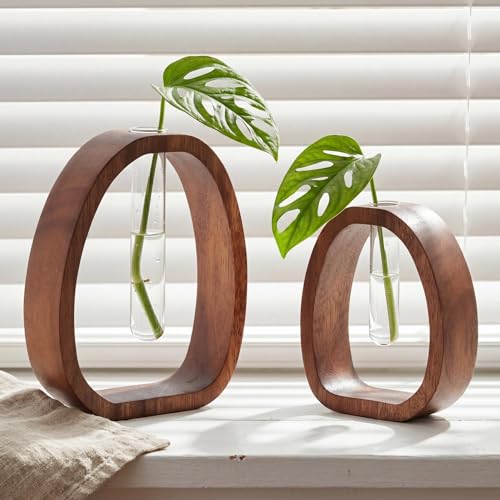
Test tubes are one of the tidiest propagation station ideas around, honestly. A small wooden rack holds a whole row of them at an angle so light hits every cutting.
It looks like something out of a science classroom, but in the best way. Coworkers who spot mine on a desk always ask where it came from.
- The desk plant that gets questions
- Angled rack keeps cuttings steady
- Fits nicely on a small shelf
Hanging Propagation Station Display

Hanging propagation stations free up counter space and look great doing it. Small glass orbs or bulbs clip onto a wooden dowel and hang right in front of a window.
It’s basically living art at that point. Cuttings dangle at eye level, roots and all, which honestly makes them more interesting to watch grow.
- Counter space, meet freedom
- Frees up windowsill room
- Roots hang right at eye level
Rose Stem Cutting Jar

A cutting garden from cuttings ideas project doesn’t get much easier than roses. Snip a healthy stem below a leaf node, strip the lower leaves and set it in a jar of water.
Read also: 17+ Beautiful Cut Flower Garden Ideas That Bloom Year-Round
Roots show up in a few weeks if the stem stays healthy. Not every cutting takes, so start with a few extra stems just in case.
- The rose bush that costs nothing
- Strip the lower leaves first
Mint Sprig Water Rooting

Mint roots faster than almost anything in a kitchen scrap collection. A single sprig in a glass of water grows visible roots within a week.
Fair warning, mint spreads aggressively once it’s planted in soil. Keep it in its own pot unless you want it taking over the whole bed.
Read also: 20+ Genius Rain Barrel Ideas That Save Thousands
- The fastest root in the kitchen
- Best kept in its own pot
Basil Cutting Rooting Jar

Last but definitely not least, basil cuttings root beautifully in a plain glass of water. Snip a four inch piece below a leaf node and drop it in, no rooting hormone needed.
Change the water every few days so it stays clear. Once the roots are an inch long, it’s ready for soil and a sunny spot on the sill.
- Free basil for the whole season
- No rooting hormone needed
- Ready for soil in about a month
Just a little note - some of the links on here may be affiliate links, which means I might earn a small commission if you decide to shop through them (at no extra cost to you!). I only post content which I'm truly enthusiastic about and would suggest to others.
And as you know, I seriously love seeing your takes on the looks and ideas on here - that means the world to me! If you recreate something, please share it here in the comments or feel free to send me a pic. I'm always excited to meet y'all! ✨🤍
Xoxo Camille
Related stories